
Across the manufacturing landscape, highly automated facilities are driving smarter and more connected production environments. One of the best examples of this trend is Hitachi Rail’s new state-of-the-art train factory in Hagerstown, Maryland.
Publicly opened in September 2025, the digital train factory stands out as a shining example of what next-generation manufacturing can look like – a major railcar production facility designed to operate with net-zero CO2 emissions. It achieves this by combining solar panels and additional electricity needs which are fulfilled by an agreement to source 100% renewable energy. The $100 million facility also features an immersive and interactive customer experience center where visitors can learn how the company applies digital and AI to optimize quality and delivery.

Orsola Spiezia during the interview
Orsola Spiezia, Digital Transformation Specialist at Hitachi Rail based in Hagerstown, played a key role inshaping the factory’s digital transformation journey and ensuring its operational success. With a background in engineering and experience across digital transformation, data science, and the integration of operational technology (OT) and information technology (IT), Spiezia was drawn to Hitachi Rail due to its commitment to sustainable innovation and the chance to contribute to the next generation of manufacturing environments. Since joining the company in 2018, she has helped turn advanced digital capabilities into practical, scalable solutions for the factory floor.
In this article, we’ll explore Spiezia’s role in building the digital-first foundations of the Hagerstown factory’s design, the role that artificial intelligence (AI) plays in powering daily operations, and the people-centric approaches that make the site a proven model for the future of manufacturing.

Spiezia sharing a light moment with a team member
From the start, Hagerstown was engineered around connectivity. “When we talk about the digital-first smart factory, we mean an environment where people, processes, data, and technologies are seamlessly connected from day one,” shared Spiezia. This baked-in network enables teams to achieve real-time visibility, boost efficiency through automation, and embed sustainability into every aspect of their operations.
Embedded connectivity is made practical in Hagerstown through a Unified Data Layer (UDL), a single, trusted source of operational data across systems that streamlines digital operations across the factory floor. “The Unified Data Layer simplifies connection, enables real-time insights, and allows data-driven decision-making across the shop floor,” said Spiezia. It brings together disparate data into a single, trusted source that’s both accessible and comprehensive.
Building this kind of universal connection required Hitachi to tackle a common challenge in the manufacturing industry: bridging the OT-IT divide. “Integrating OT and IT systems isn’t easy,” noted Spiezia, “OT systems are legacy, siloed, and built for reliability, while IT is fast-changing and cloud-driven.” Balancing these systems at Hagerstown requires shared standards, secure connectivity, and strong collaboration between engineering and IT teams to align architecture and processes. This helps ensure that digital solutions empower operators rather than overwhelm them.
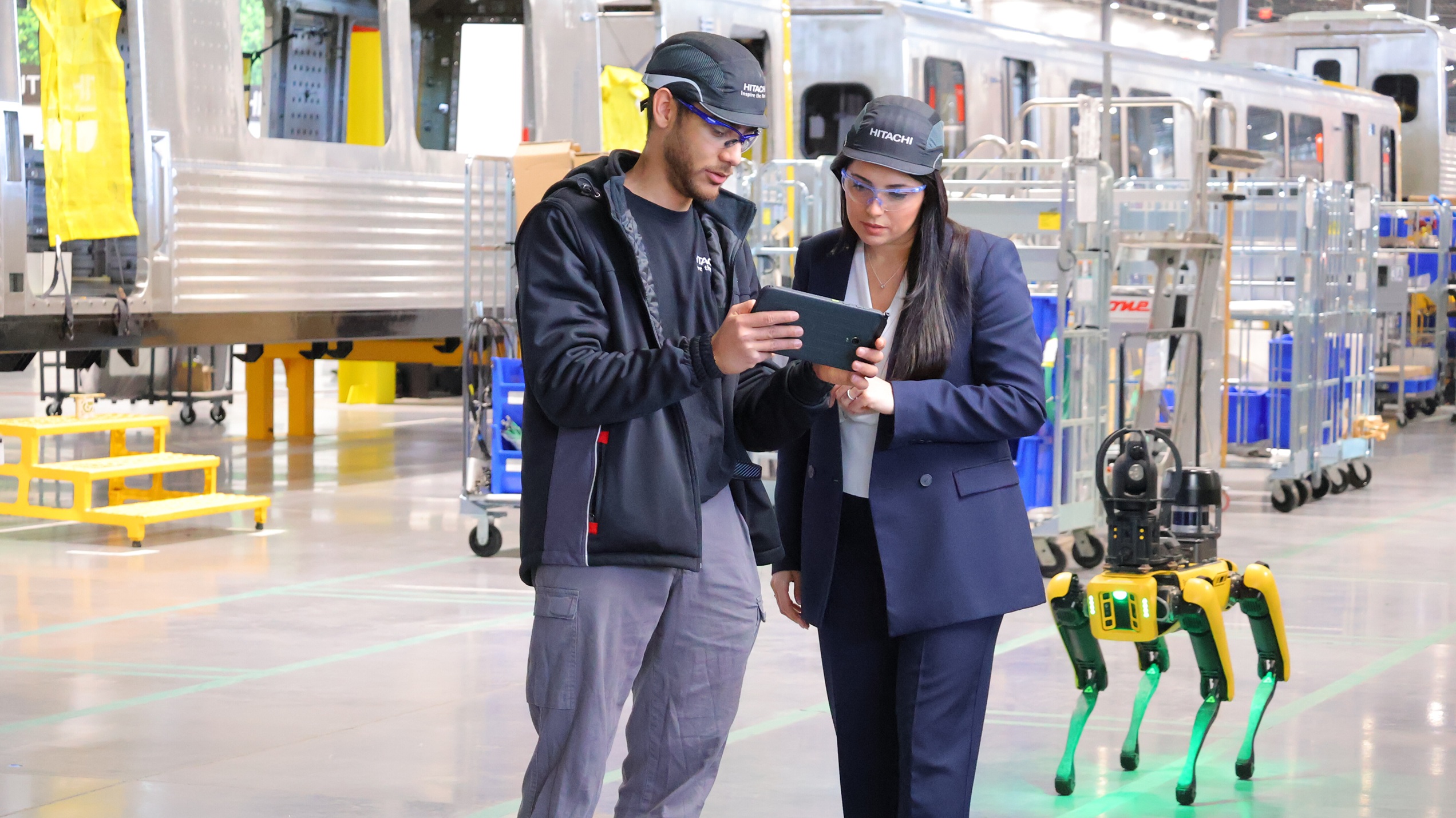
Spiezia discusses an AI‑powered solution for automated rail vehicle inspection with a factory colleague
It’d be impossible to discuss contemporary digital transformation efforts without mentioning AI. At Hagerstown, AI solutions are embedded into operations across different levels, helping automate a number of key tasks.
AI solutions are deployed across the shopfloor where they deliver tangible operational benefits. This includes computer vision applications for enhanced automated quality inspection, predictive maintenance, workflow optimization, and more. “These use cases help us reduce defects, accelerate root-cause analysis, and improve equipment up time,” noted Spiezia.
Looking ahead, Hitachi Rail plans to embed AI solutions that move from assistive analytics to the agentic, real-time orchestration of manufacturing work. Through their strategic partnership with Google Cloud, the team aims to implement solutions that accelerate innovation, enhance productivity, and advance the rail sector’s transition toward autonomous and sustainable mobility.
By leveraging more advanced AI agents in their day-to-day tasks, the Hagerstown team hopes to reduce manual workloads and minimize delays, ultimately leading to more autonomous operations that let workers focus on higher-value judgment and oversight.
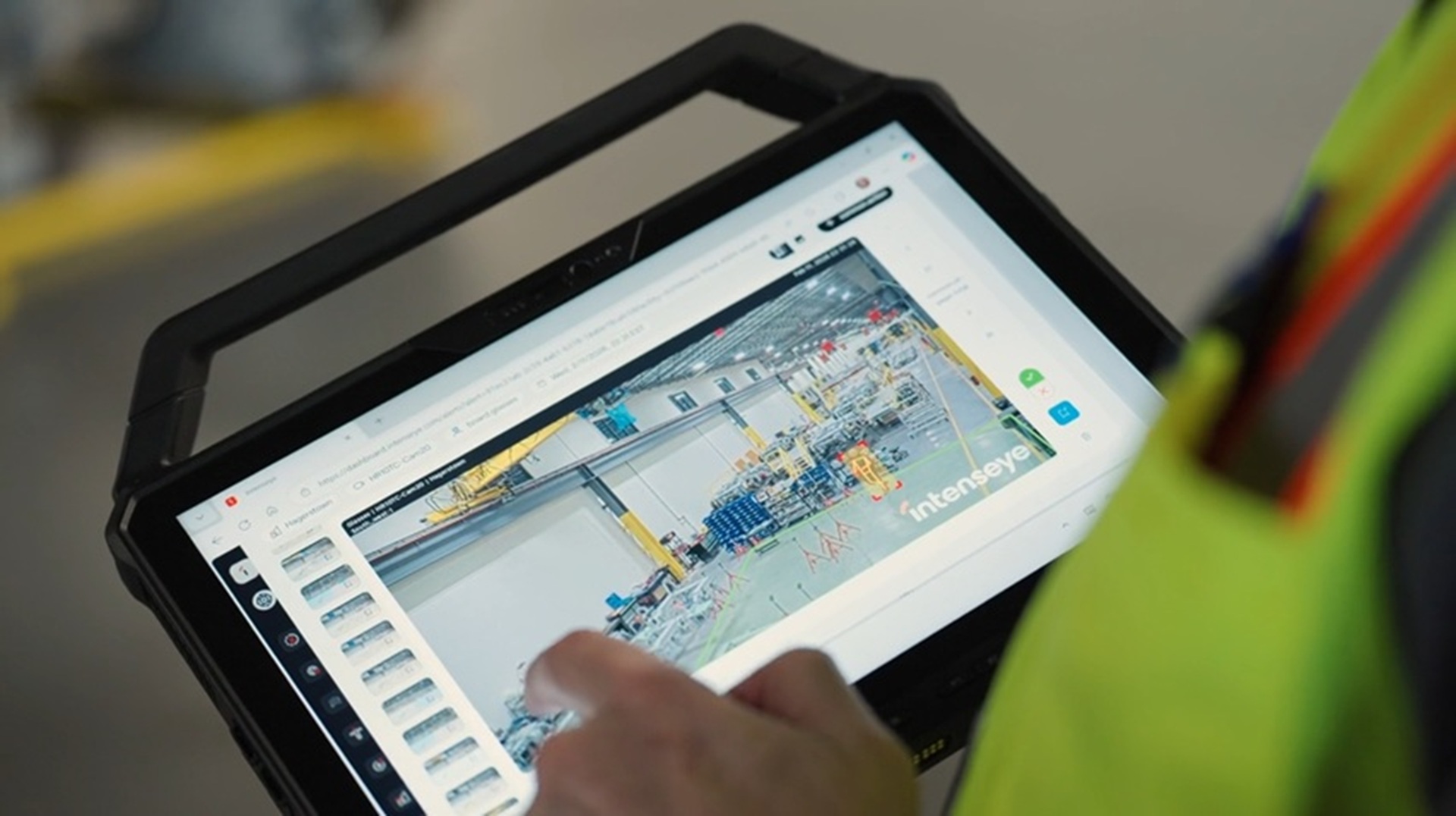
Monitor displaying the AI‑driven Health and Safety Platform, which enhances safety with AI oversight
At the heart of Hagerstown’s digital-first model is a commitment to empowering workers rather than replacing them. “We focus on digital tools that can provide real-time guidance through intuitive solutions that reduce complexity and simplify tasks,” shared Spiezia. “It’s really about striking the right balance between people, expertise, and digital technologies.” This people-centric approach helps ensure that advanced technologies advance human capabilities without overshadowing or overcomplicating them.
At the same time, operating this level of smart factory requires a skilled, future-ready workforce. The industry-wide shift towards digital-forward manufacturing has introduced a broad set of new jobs—from data engineers to automation specialists, digital technicians, and AI-augmented operators—that each require a modern skill set. “These roles demand strong capabilities in robotics, cloud systems, automation, and human-machine interface management,” said Spiezia, highlighting skills beyond those of the traditional factory floor operator.
Enabling the workforce to take on these new responsibilities requires deliberate training and change management. Hitachi Rail partnered directly with end-users throughout the process and invested in hands-on training, transparent communication, and co‑design sessions with frontline teams to ensure that technological solutions reflect real operational needs. This collaborative approach helped accelerate factory workers’ digital readiness and strengthened their confidence, engagement, and ability to thrive long-term in an increasingly digital manufacturing environment.
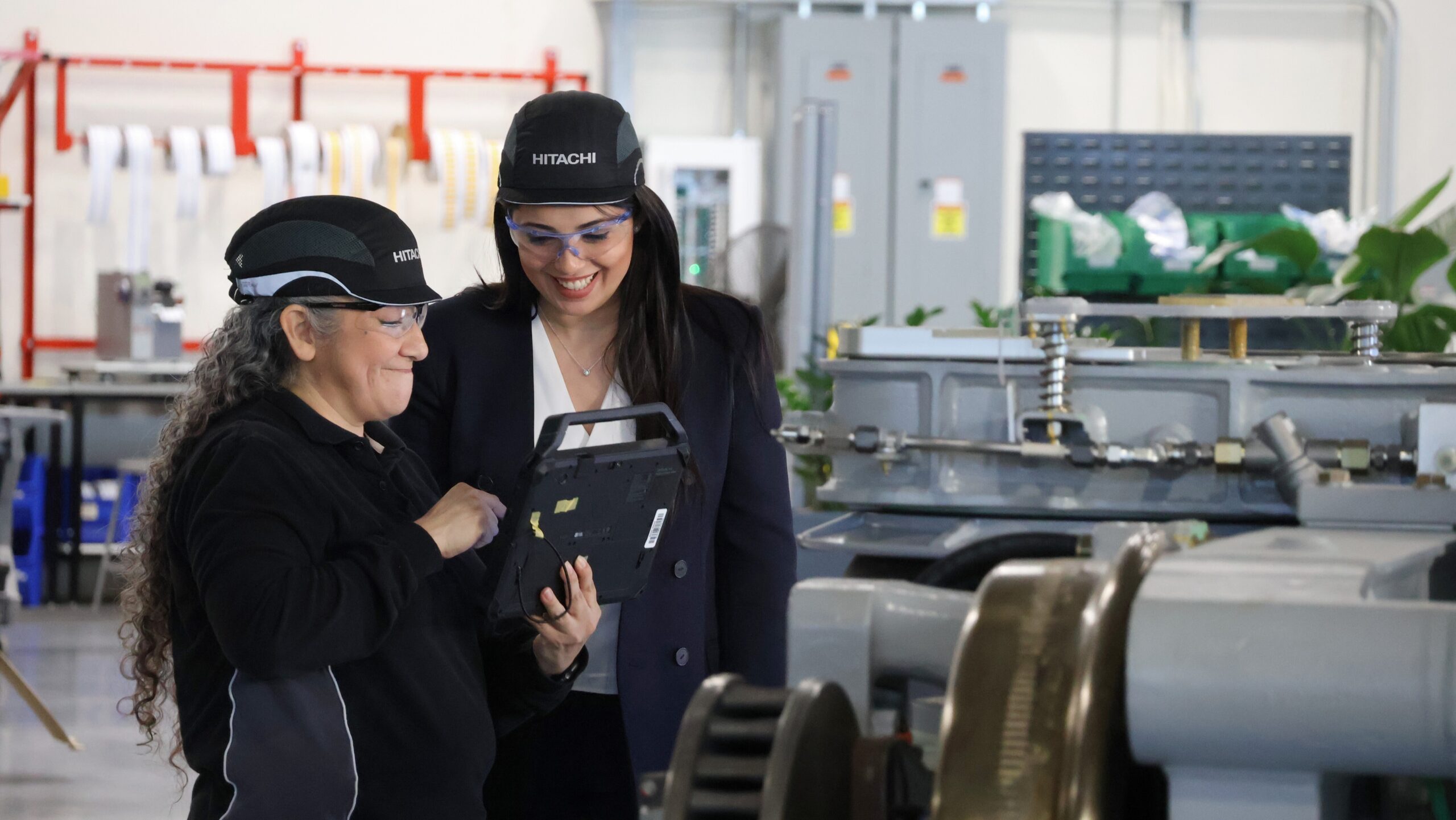
Spiezia discusses an inspection solution powered by Digital Twin technology with a factory colleague
Beyond employee enablement and streamlined production, Hagerstown’s digital infrastructure helps support key quality, and operational consistency efforts. Features such as automated quality inspection, digital twins, and connected workflows help “improve quality, and safely improve speed,” according to Spiezia. They reduce variability and build customer trust by providing transparency throughout each step of the production process.
Another core pillar of Hagerstown’s operational model is sustainability. The site is designed to support many of the long-term goals present across manufacturing, from zero landfill to on-site solar generation and 100% renewable energy usage. “We track our progress on sustainability goals through interactive dashboards,” shared Spiezia. “We monitor energy usage, waste reduction, and solar panel energy performance as part of our factory analytics.” By integrating these environmental metrics into the factory’s broader analytics ecosystem, the team makes sure that “green gains” reinforce productivity improvements rather than competing with them.
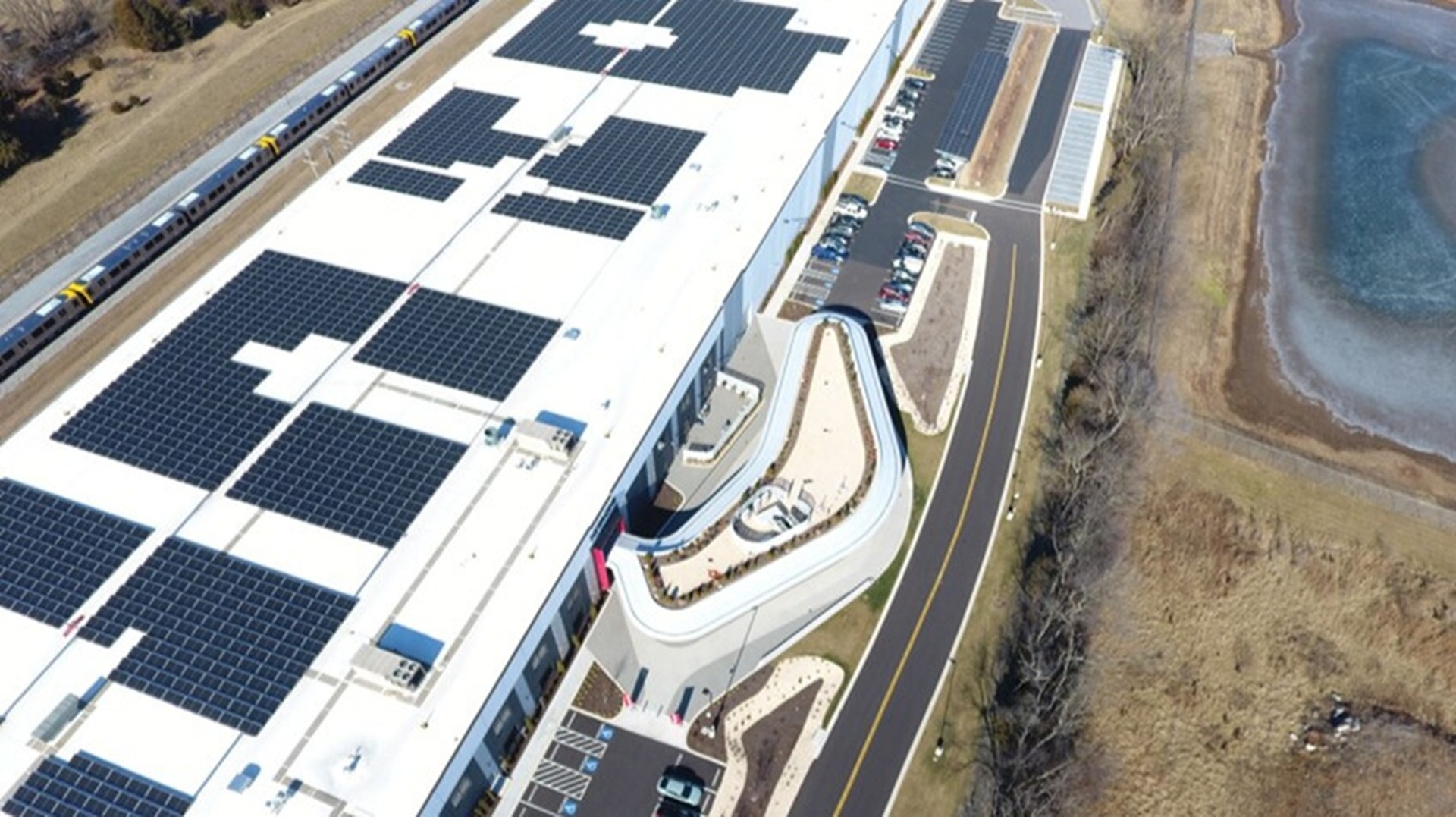
A zero CO₂ emission plant powered by solar energy and 100% renewable electricity
Beyond its walls, the Hagerstown facility delivers meaningful economic and social benefits to its surrounding community. It supports approximately 1,300 indirect jobs across the value chain, contributes to local procurement efforts, and drives regional growth through ongoing technical upskilling and workforce development efforts. “This factory has a real, tangible impact on the regional ecosystem,” shared Spiezia. It’s a presence that strengthens the community by creating jobs and sustaining investment in local capabilities.

Orsola Spiezia discussing the future of digital factories
Hitachi Rails’ Hagerstown digital factory demonstrates what’s possible when digital solutions and human-centered design are aligned in manufacturing environments. “The digital capabilities we’ve built in Hagerstown really set the stage for the future,” said Spiezia. “They lay the foundation for a smarter and more sustainable manufacturing environment.”
More than just a milestone for Hitachi Rail, the digital factory serves as a model for how organizations can align autonomous, efficient, and sustainable operations to elevate quality and community impact across the manufacturing industry.
Related Links: