
The software development lifecycle (SDLC) process is subject to frequent iteration and improvement as the software we build, and the world we build it for, continue to change. But nothing has impacted SDLC quite as drastically as the rise of artificial intelligence (AI). New AI models and capabilities are collapsing traditional SDLC stages, accelerating processes and enabling teams to move from ideation to implementation with unprecedented speed.
At the forefront of this transformation is Suhail Khaki, Chief Technology Officer of SDLC at GlobalLogic, a Hitachi Group Company. With more than 16 years at the company and a career spanning major digital transformation initiatives across multiple industries, Khaki has played a pivotal role in shaping how AI-powered engineering practices can help evolve the way we approach modern SDLC frameworks.
As SDLC continues to evolve, exploring Khaki’s hands-on expertise through the lens of his career journey—as well as key applications of GlobalLogic’s unified VelocityAI platform—can help provide a clear view of how modern organizations are navigating this new era of intelligent, AI-powered software development.
“How do gears move? How are engines built? How do machines actually work?”
Motivated by questions like these, Khaki studied mechanical engineering. Along the way, his exposure to CAD/CAM sparked a new line of inquiry: How are these tools themselves created? When he learned they were written in C, he dove in—fell in love with programming—and began his career as a C programming instructor.
“By nature, I’m a curious person. That curiosity is what inspires me to do things—and keeps me interested in whatever I take on.” From instruction, Khaki moved into software development, spending several years at different startups. When one of those startups was acquired by GlobalLogic, he joined the company as a Senior Solution Architect. Since then, he has helped lead its SDLC practice and today serves as Chief Technology Officer of SDLC.
What has kept him at GlobalLogic is the culture—open, transparent, and designed to let people grow at their own pace. “If you want accelerated growth, there’s a path. If you prefer a steadier pace, there’s a path for that too. It’s up to you how you want to grow.” True to form, Khaki has continued to follow his curiosity across successive waves of new technologies—not to chase titles, he notes, but to satisfy a drive to learn. Paradoxically, that same curiosity has made him a better developer and technologist—and now shapes his perspective on how AI is transforming the modern SDLC.

Suhail Khaki shares his insights in an interview
According to Khaki, AI’s impact is nothing short of a total paradigm shift in the realm of software design and delivery. Developer workloads are shifting significantly, resulting in changes that include:
As AI solutions continue to evolve, so will their use cases in the SDLC process and the lasting impacts their implementation will be expected to have.
As a future-oriented software leader, GlobalLogic recognized an opportunity to unify and streamline AI, digital, and human-centered design capabilities into a solution that could operate across the software development lifecycle process. GlobalLogic VelocityAI was created to fill this gap, surmounting the challenge of fragmented and discordant point solutions and providing what Khaki identified as “that end-to-end orchestration of the flow, all the way from requirement gathering to software deployment.” Its goal is to enable the use of today’s best AI and software solutions in an impactful and sustainable manner, not a fragmented and uncertain approach.
VelocityAI achieves this goal by providing a unified platform that consolidates specialized AI agents, contextual intelligence, and orchestration capabilities into one cohesive ecosystem for users. As Khaki explains, “Even the most intelligent people need context to deliver—and so do AI agents. Intelligence isn’t enough; context sets the boundaries of the problem. VelocityAI provides that context so agents can work within it and deliver what’s expected.”
One key differentiator of VelocityAI is its Context-Aware Knowledge Engine (CAKE), which integrates with systems like Jira, Confluence, and document repositories to create a multilayer knowledge stack for AI agents to draw on for accurate and efficient performance. “Before an agent starts a task, it gets the context from that knowledge base and then works within that context,” shared Khaki. This helps to ensure completeness and clarity across the SDLC, while improving output quality and minimizing longstanding inefficiencies.
Another key benefit of VelocityAI’s approach is its adaptability. Khaki and his GlobalLogic team recognize that no two enterprises are the same, and that real-world integrations will vary on a case-by-case basis. By maintaining seamless integrations while allowing users to replace or swap layers of the CAKE architecture based on their specific project or domain, VelocityAI remains both flexible and interoperable. It ultimately enables organizations to scale AI across the SDLC in a responsible, reliable, and reusable manner, aligning with Hitachi’s broader AI vision and strategy.
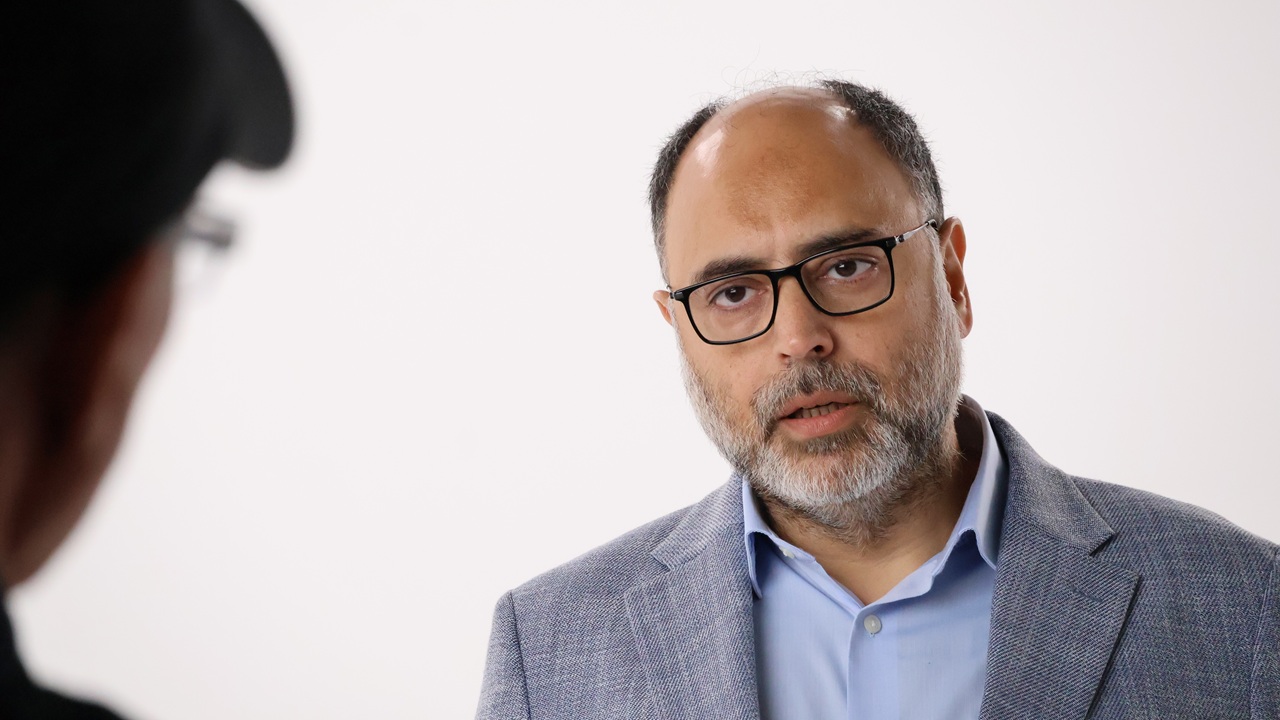
“The next phase is centered on agents, and it has already begun,” said Khaki.
What kind of impact is this streamlined, applicable SDLC enhancement having on real-world customers? “They always want faster, better, and cheaper,” noted Khaki. AI-driven solutions can meaningfully advance all three of these goals. With VelocityAI, customers have measured benefits that include:
These types of AI-driven benefits demonstrate how these solutions, when implemented effectively, can span software development, quality assurance, and production operations. By front-loading context-rich knowledge into SDLC processes, teams can cut ambiguity and rework and see improvements across timing, scheduling, quality, and more.
Looking past the current moment to the future of AI-driven SDLC, Khaki believes the next big shift will be from AI tools to autonomous agents. He believes that AI agents will begin to execute tasks in a manner similar to autonomous driving technology: In a self-driving car, the machine is trusted to operate without entirely removing the human driver from the loop. With coding, “humans [will be] on the loop, not in the loop,” claimed Khaki, “which means that a human is reviewing the work done by the agents and approving it.” These agent-driven processes will allow for increased autonomy as reliability improves, while still preserving accountable oversight where necessary.
In the near-term, GlobalLogic is targeting agentic support for tasks like backlog generation, context augmentation, and intelligent defect resolution. While critical, these areas of the SDLC can become tedious and prone to human error. They require language understanding, pattern recognition, and deep context—all of which can be provided by purpose-built agents. With the proper training, these solutions can analyze logs, correlate prior issues, evaluate code impact, and propose fixes in a fraction of the time these processes typically take.
Longer-term, the autonomous driving analogy offers a compelling blueprint for AI-empowered SDLC: as we move from AI-assisted processes to AI-orchestrated systems, humans will increasingly be used as overseers rather than co-developers. In practical terms, this means that the AI layer will coordinate tasks across systems, reducing handoff latency and standardizing quality at scale.

Suhail Khaki during the interview
As we continue making technological progress, AI will shift from a set of disconnected tools into an overarching, connected system for improved SDLC—all while empowering developers along the way.
VelocityAI helps operationalize this shift at the enterprise level, orchestrating end-to-end delivery and grounding AI tools and agents in the layered, real-time context they need to operate effectively. It helps provide modern teams with a practical path from adopting AI assistants to empowering autonomous agents that can help push SDLC into a more efficient, reliable future.
Related Link