
Much of what the public sees with respect to artificial intelligence (AI) today is consumer-focused—think Large Language Models (LLMs), customer service chatbots, generative images, and search engine AI overviews. These applications largely live in the information and creative spaces. But there’s an entire world of AI operating behind the scenes to improve the physical world—optimizing and automating factories, power grids, and other critical infrastructure that power our daily lives. This fast-growing subcategory of Physical AI, known as Industrial AI, manages and automates equipment and processes within the mission-critical systems of industry.
Chetan Gupta, general manager of Hitachi’s Advanced AI Innovation Center and vice president of its Industrial AI Lab, has spent his career at the intersection of AI research and real-world impact. With a PhD in mathematics and extensive research experience, Gupta joined Hitachi in 2013 to help shape its evolution from manufacturing giant to digital solutions powerhouse. “Given my engineering background, I’ve always been interested in applying AI and machine learning to the real industrial world, in a way that positively impacts societal infrastructure. So, it was a natural fit for me to come to Hitachi,” remarked Gupta.
Today, he spearheads Hitachi’s AI innovations, combining cutting-edge research with practical deployment strategies to keep the organization at the forefront of industrial AI. Gupta’s work—which champions an experience-driven approach to industrial AI—sits at the heart of the company’s commitment to bring innovative solutions, expertise, and reliability to industrial spaces.

Chetan Gupta during the interview
Virtually every industry has been touched by the push for AI-driven operations. This includes the industrial sector, whose AI market is projected to grow at a CAGR of 23%, reaching close to $154 billion in value by 2030. Long-established Industrial environments are ripe for optimization, especially in the face of the workforce shortages, operational inefficiencies, and environmental and sustainability challenges they face today.
But where other industries can experiment more freely with their AI solutions, the Industrial sector does not often have the luxury of trial and error. Industrial leaders cannot “move fast and break things,” like their consumer-facing peers. While many AI developers thrive on abundant data and rapid iteration, industrial environments—like energy grids, mobility networks, and power plants—demand precision and reliability.
“It’s not a good idea to break things because the losses can be significant,” noted Gupta, “and not just financial losses, but human lives are at stake when you make a mistake in the real, physical world.”
To keep pace with evolving technology while accounting for this inherent risk, Gupta advocates for an adjusted “Move fast, break nothing” mentality. “We want to move fast, and we are moving very fast,” shared Gupta. “At the same time, we’re always cognizant of the fact that when we deploy AI in the field, it has real-world ramifications.”
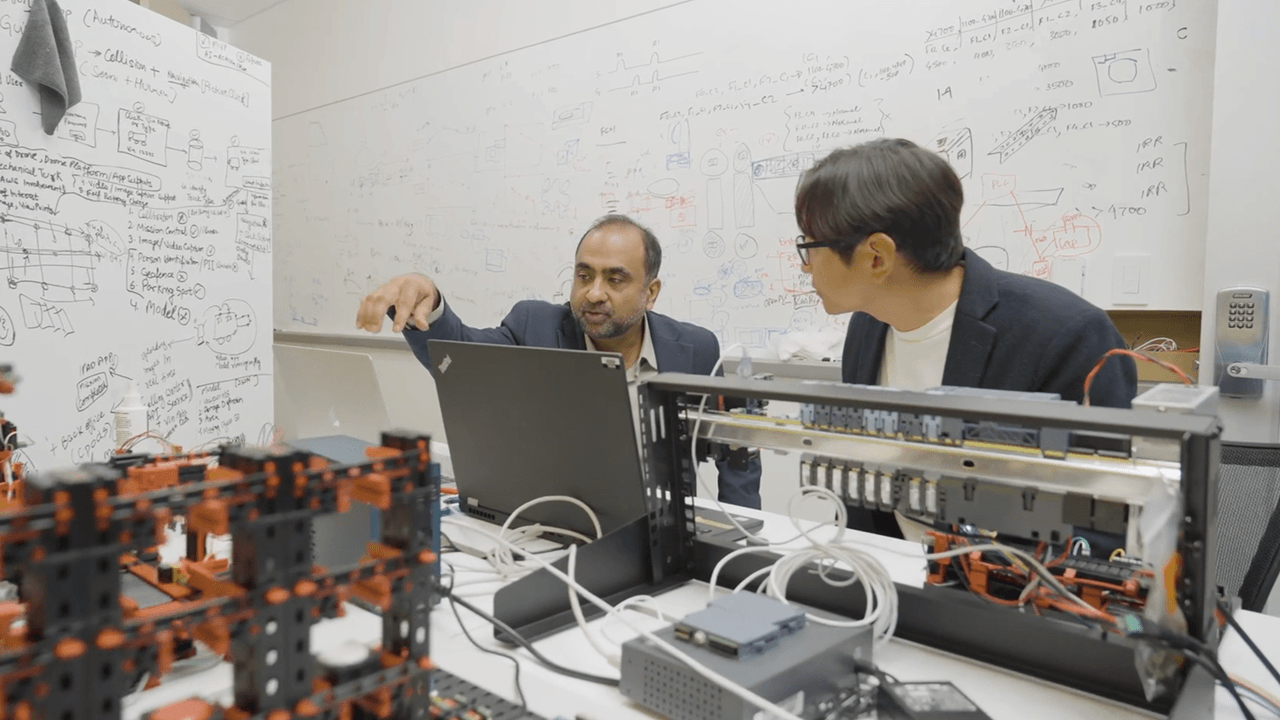
Chetan Gupta discusses the potential of Industrial AI
Successfully designing and implementing AI in critical infrastructure environments requires an approach that leverages both deep domain expertise and practical deployment. This helps ensure that cutting-edge solutions are paired with operational realities, taking stock of everything from safety constraints to process flows during the design process rather than in retrospect.
Hitachi’s identity as not just a manufacturing company but a societal infrastructure company helps it stand out in the field as an Industrial domain expert. As a key player in critical infrastructure such as energy and mobility, and a manufacturer of a range of critical equipment, the company has access to rich expertise and real-world data, enabling it to design AI solutions that address the more nuanced challenges at hand.
Gupta understands the importance of this knowledge, noting that his team “thinks systematically about domain knowledge, understanding business pain points, not just data but metadata as well, and the physical constraints in the field.”
This combination of learned experience and practical application enables Hitachi to develop industrial AI solutions that are innovative and pragmatic in equal measure, suited for the real-world requirements of industrial organizations.

Chetan Gupta shares his insights in an interview
Armed with this informed approach, Gupta’s teams can design industrial AI solutions that go beyond the standard predictive maintenance and anomaly detection models. Both Generative and Agentic AI present exciting opportunities for development across the entire value chain, from model design and procurement to customer support. The capacity to streamline more tedious tasks (like data collection and analysis) makes these tools indispensable in Industrial optimization projects.
One key AI-driven breakthrough is the capacity to generate reliable synthetic data. Today’s Industrial environments tend to lack large and continuous datasets, making it difficult to train models. “Very often, we don’t have enough industrial data to build machine learning models,” said Gupta. “Generative AI allows us to generate and simulate data, so we can build machine learning models over that.”
By combining domain expertise and historical data with AI’s capacity to generate reliable synthetic datasets, Hitachi is able to develop field-ready models. This enables teams to operationalize industrial AI models, deploying them in real-world settings and measuring their success.
“It’s not sufficient to build a solution in the lab and throw it over the fence,” stressed Gupta. “The proof of the pudding is in the eating.”
By rigorously testing and adjusting the model pre-deployment, Hitachi ensures that its AI solutions are aligned with customer goals, constraints, and key performance indicators.
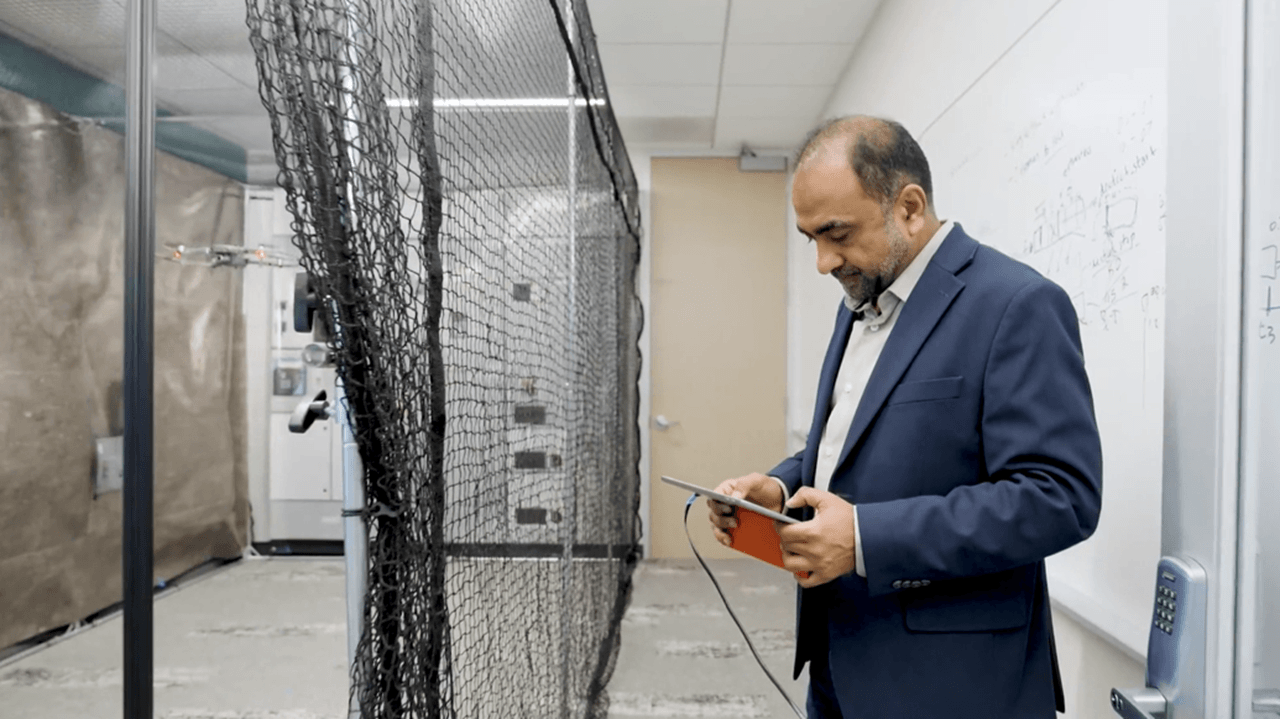
Chetan Gupta conducts experiments using drones
Beyond their more technical applications, well-conceived AI models can help address broader Industrial challenges. For example, one of the most pressing issues of the Industrial sector is its shrinking workforce. As skilled workers age toward retirement or move into other industries, it becomes harder to maintain critical operations.
To help address these workforce challenges, Hitachi has developed AI-based digital solutions designed to support frontline workers and transform on-site operations. By improving productivity, providing the right knowledge to the worker at the right time, enabling the transfer of veteran expertise, and reforming workstyles, this solution helps maintain critical operations despite a shrinking workforce. Among other things, it uses AI to analyze video from wearable cameras worn by field engineers in real time, delivering features that enhance both safety and efficiency.
“We need to empower our frontline workers to do more,” said Gupta of Hitachi’s human-centered approach to AI development. “We want to help them be more productive, safer, and more efficient in their jobs.”
The company knows that AI is most valuable when augmenting, rather than replacing, human capabilities. AI solutions that can help workers make quick and accurate decisions help to reduce repeat jobs and increase safety. Additionally, AI can be used to accelerate training and onboarding for new employees, making the upskilling process more efficient and keeping teams prepared to do their best work.
For Industrial organizations exploring AI adoption and integration, Gupta offers a clear message: start small and scale smart.
“Start with a small pilot and make sure it works in the field,” said Gupta. “Then bring in the necessary training and build a culture of internal expertise. Once you do that, once you have the first proof point, build on that success and create solutions that benefit your organization.”
Gupta’s mindset—and Hitachi’s approach to industrial AI at large—demonstrates that successful adoption is not about chasing trends or relying on a “fail fast” approach. Solving real problems in the industrial sector means prioritizing safe, reliable operations above all else. It takes rigor, research, and responsible innovation. By combining domain expertise with human-centric thinking and design, Hitachi is able to move fast, break nothing, and drive the continued evolution of industrial AI applications.
Related Links:
Industrial AI: Move fast, break nothing – Hitachi Digital
Q&A: The Criticality of Introducing AI into Mission Critical Systems – Hitachi Digital